Regional Payment Processor Restrictions Reshape Bonus Structures in Virtual Blackjack Platforms Operating Within Emerging Latin American Jurisdictions
Bianca Sullivan · Jul 31, 2026
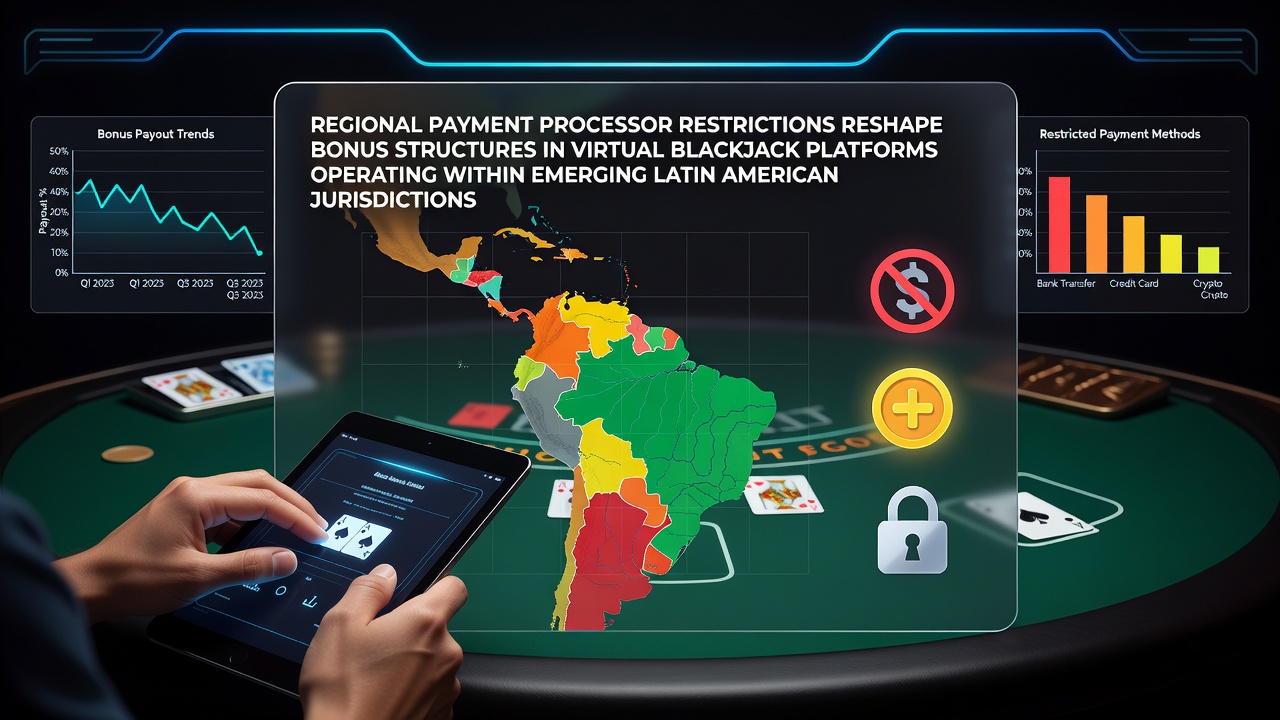
Regional Payment Processor Restrictions Reshape Bonus Structures in Virtual Blackjack Platforms Operating Within Emerging Latin American Jurisdictions
Payment processor limitations have begun altering how virtual blackjack platforms structure player incentives across several emerging Latin American markets, with operators adjusting deposit matches, cashback tiers, and loyalty rewards in response to shifting financial rails. Data from July 2026 shows platforms in Brazil, Mexico, and Colombia implementing new bonus frameworks after local banks and processors tightened rules on gambling-related transactions.
Those who've tracked these developments note that many platforms now emphasize time-based rewards over upfront deposits, since processors in key jurisdictions have capped or flagged certain e-wallet and card transactions tied to online gaming. Figures from regional financial oversight bodies indicate transaction approval rates for gambling deposits dropped between 18 and 27 percent in the first half of 2026 compared with the prior year.
Payment Landscape Adjustments Across Jurisdictions
Brazil's central bank expanded monitoring of cross-border transfers in early 2026, prompting platforms to pivot toward local payment methods that carry different fee structures and verification requirements. Operators responded by replacing large welcome bonuses with segmented loyalty programs that unlock rewards after consistent play rather than initial deposits. Similar patterns emerged in Mexico where state-level banking guidelines introduced additional reporting for high-volume gaming accounts.
Colombia saw fintech providers impose daily limits on transfers to gaming accounts, leading several virtual blackjack sites to introduce smaller, recurring bonus credits distributed weekly instead of larger lump-sum offers. Observers note these shifts align with broader efforts to stabilize transaction flows while maintaining player engagement metrics.
Bonus Model Transformations in Virtual Blackjack
Platforms operating in these markets have documented changes in bonus composition, moving away from percentage-based deposit matches toward fixed credit amounts tied to verified play volume. Research from industry tracking services reveals that average bonus values per active user declined 22 percent between January and July 2026, while the frequency of smaller reward triggers increased.
Virtual blackjack operators now integrate cashback systems that calculate returns based on net losses over rolling periods rather than single-session deposits, a structure that accommodates processor-imposed settlement delays. Multiple platforms also introduced tiered loyalty points that convert into playable credits only after reaching predetermined thresholds, reducing immediate cash-out pressure on restricted payment channels.

Regional Regulatory and Market Responses
According to reports from the Brazilian Central Bank, updated guidelines on electronic transfers effective in mid-2026 required clearer categorization of gaming-related activity, which accelerated platform adaptations. In parallel, Mexico's banking association published transaction volume summaries showing reduced card authorization success rates for offshore gaming merchants.
Operators in Argentina and Chile have begun testing hybrid reward models that combine in-platform currency with limited external redemption options, aiming to work within processor constraints while preserving user retention. Data compiled by regional gaming associations indicates that platforms adopting these layered approaches maintained monthly active user counts closer to 2025 levels than those retaining traditional bonus formats.
Platform Adaptations and Player Patterns
Case studies from several platforms reveal that virtual blackjack tables now feature integrated progress trackers displaying progress toward next reward tiers, replacing prominent deposit bonus banners. Players encounter more frequent small-credit distributions after completing set numbers of hands, a format that aligns with processor settlement cycles.
Analysts tracking user behavior across these jurisdictions report longer average session durations when rewards accrue gradually, although deposit volumes per user have stabilized rather than grown. Platforms continue refining these structures as additional processor policies roll out through the remainder of 2026.
Conclusion
Regional payment processor restrictions continue driving measurable adjustments in how virtual blackjack platforms allocate bonuses within emerging Latin American markets, with operators favoring incremental rewards and loyalty mechanics over traditional deposit incentives. Ongoing regulatory updates through late 2026 are expected to prompt further refinements as platforms monitor transaction success rates and player engagement data across affected jurisdictions.