Machine Learning Forecasts of Player Dropout Rates in Multi-State Digital Wagering Networks
Vera Roth · Aug 21, 2026
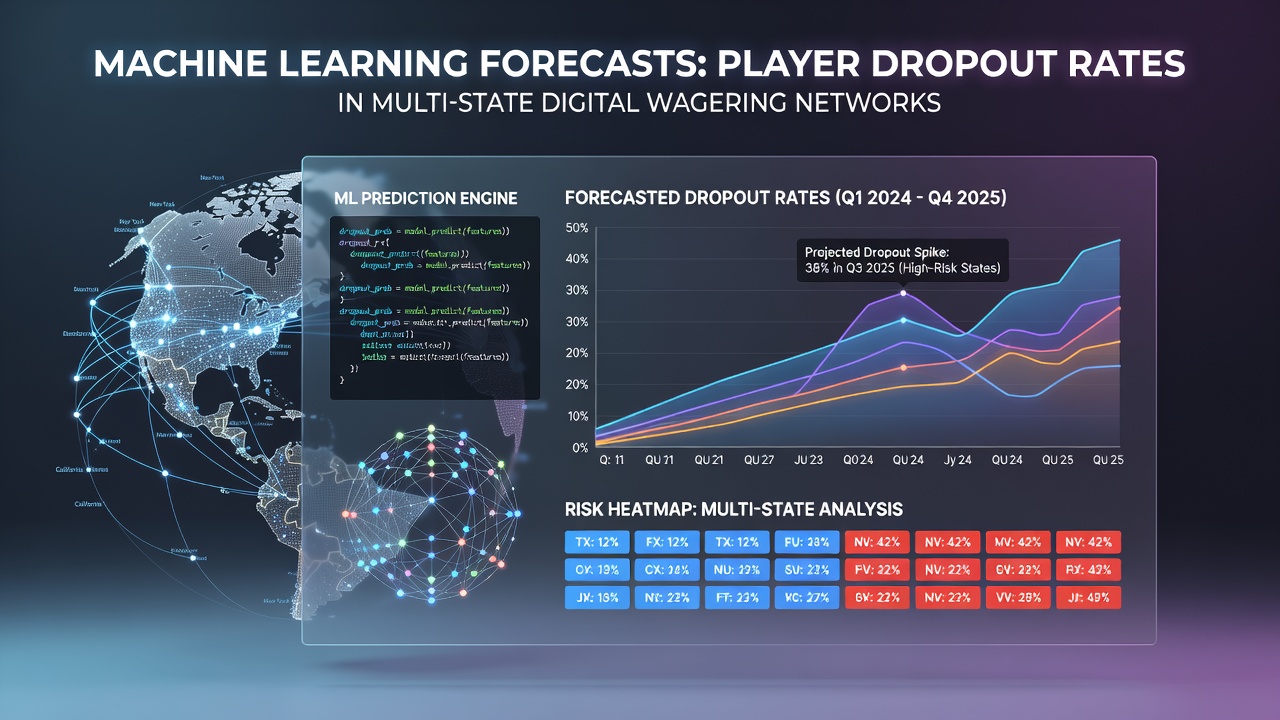
Machine Learning Forecasts of Player Dropout Rates in Multi-State Digital Wagering Networks
Operators across multiple U.S. states have integrated machine learning systems to predict player dropout rates in digital wagering networks, where participants engage with sports betting, casino-style games, and prediction markets through unified platforms that span regulatory jurisdictions. These models process behavioral signals such as deposit frequency, session duration, and wager variety to generate probability scores for churn, allowing platforms to adjust retention tactics before users disengage entirely.
Core Components of Dropout Prediction Models
Researchers at academic institutions and industry labs train supervised learning algorithms on historical transaction logs from networks operating in states like New Jersey, Pennsylvania, and Michigan, where data aggregation occurs under interstate compacts that permit shared user pools while maintaining separate tax reporting. Features often include time between logins, average bet size relative to account balance, and response rates to bonus offers, with gradient boosting and neural network architectures emerging as common choices because they handle the non-linear relationships present in gambling datasets.
Models distinguish between voluntary exits, where players simply stop logging in, and forced churn tied to account restrictions or payment issues, yet the same feature set frequently captures both categories when external regulatory events such as deposit limit changes are added as covariates. Validation occurs through time-series splits that simulate real-world deployment, ensuring predictions remain robust when market conditions shift after events like the 2026 FIFA World Cup expansion.
Data Integration Across State Lines
Multi-state digital wagering networks compile anonymized activity records into centralized lakes that comply with each jurisdiction's privacy rules, enabling models to identify cross-border patterns such as users who migrate activity from one state platform to another following regulatory updates. In August 2026, several operators reported deploying federated learning techniques that keep raw data within state boundaries while sharing only model updates, a response to tightening oversight from bodies including the New Jersey Division of Gaming Enforcement and the Nevada Gaming Control Board.
External datasets sometimes supplement internal logs, incorporating macroeconomic indicators like regional unemployment rates or sports calendar density, because evidence shows these variables correlate with session volume drops in certain markets. Platforms that link these inputs report improved forecast accuracy during periods of high event concentration, such as overlapping baseball and football seasons.
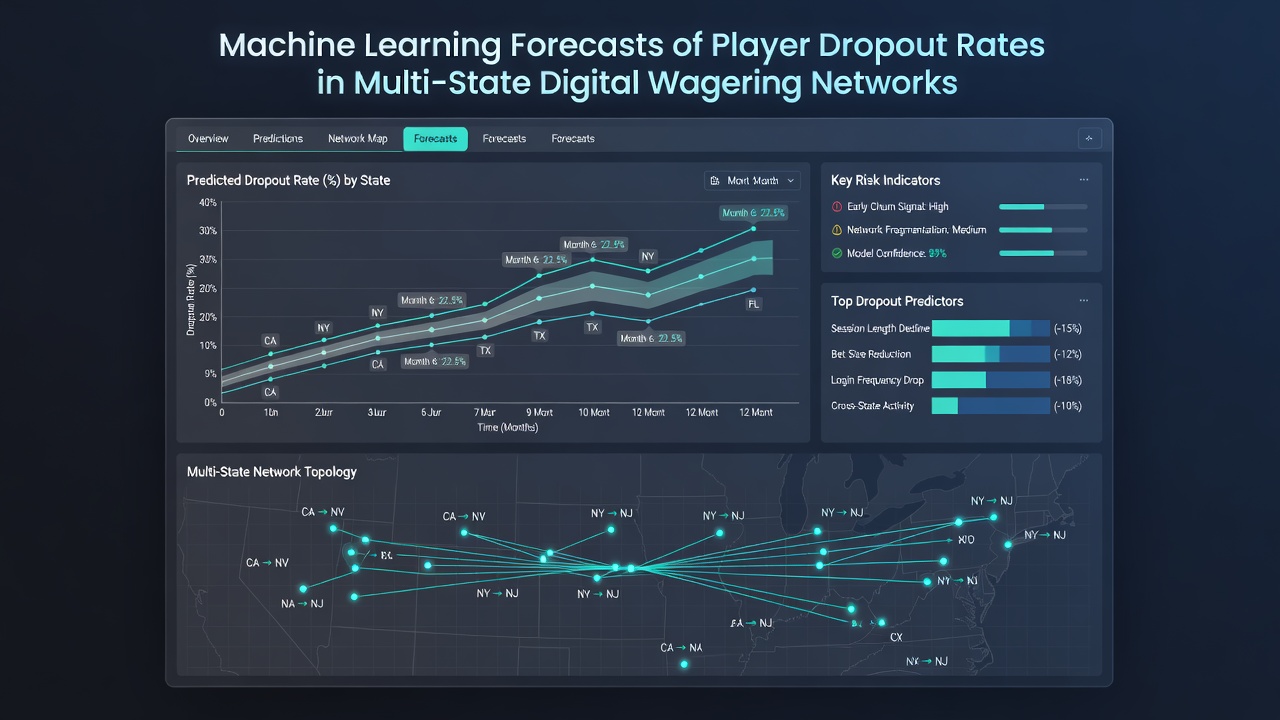
Performance Metrics and Operational Use
Studies published in journals focused on computational social science indicate that well-tuned models reach area-under-curve scores above 0.80 when forecasting 30-day dropout, though precision varies by player segment with high-volume users proving harder to predict than casual participants. Operators apply these outputs to trigger personalized interventions, including targeted free-play credits or loyalty tier adjustments, and they track lift through controlled A/B tests that isolate the effect of model-driven outreach from baseline retention efforts.
One documented implementation in a network spanning five states used survival analysis alongside classification to estimate not only whether a player would leave but also the expected remaining lifetime value, allowing resource allocation toward users whose departure would produce the largest revenue impact. Results showed measurable reductions in aggregate churn rates after six months of deployment, according to internal metrics shared at industry conferences.
Regulatory and Ethical Considerations
State regulators require transparency around automated decision systems that influence account treatment, prompting operators to document feature importance and maintain audit trails for model outputs. The Australian Communications and Media Authority has examined similar frameworks in its market, providing comparative data on how disclosure rules affect model adoption across borders. Industry groups such as the European Gaming and Betting Association have published guidelines urging periodic bias audits, particularly when models incorporate demographic proxies that could produce uneven intervention rates across player cohorts.
Multi-state operators must reconcile differing state standards on responsible gambling messaging, which sometimes restricts the timing or content of retention offers generated by dropout forecasts. Compliance teams therefore embed regulatory constraints directly into scoring pipelines so that high-risk predictions trigger only approved actions.
Conclusion
Machine learning applications for dropout forecasting continue to evolve as networks expand and datasets grow richer through additional state integrations. Observers note that ongoing refinements in feature engineering and model interpretability will determine how widely these systems influence day-to-day operations while satisfying oversight requirements from diverse regulatory bodies. Data from 2026 deployments suggests sustained investment in these tools as platforms seek to balance revenue goals with player longevity metrics across jurisdictional boundaries.