Interface Color Variations and Their Measurable Effects on Risk Assessment Speed During Extended Online Roulette Play Sessions
Vera Roth · Aug 28, 2026
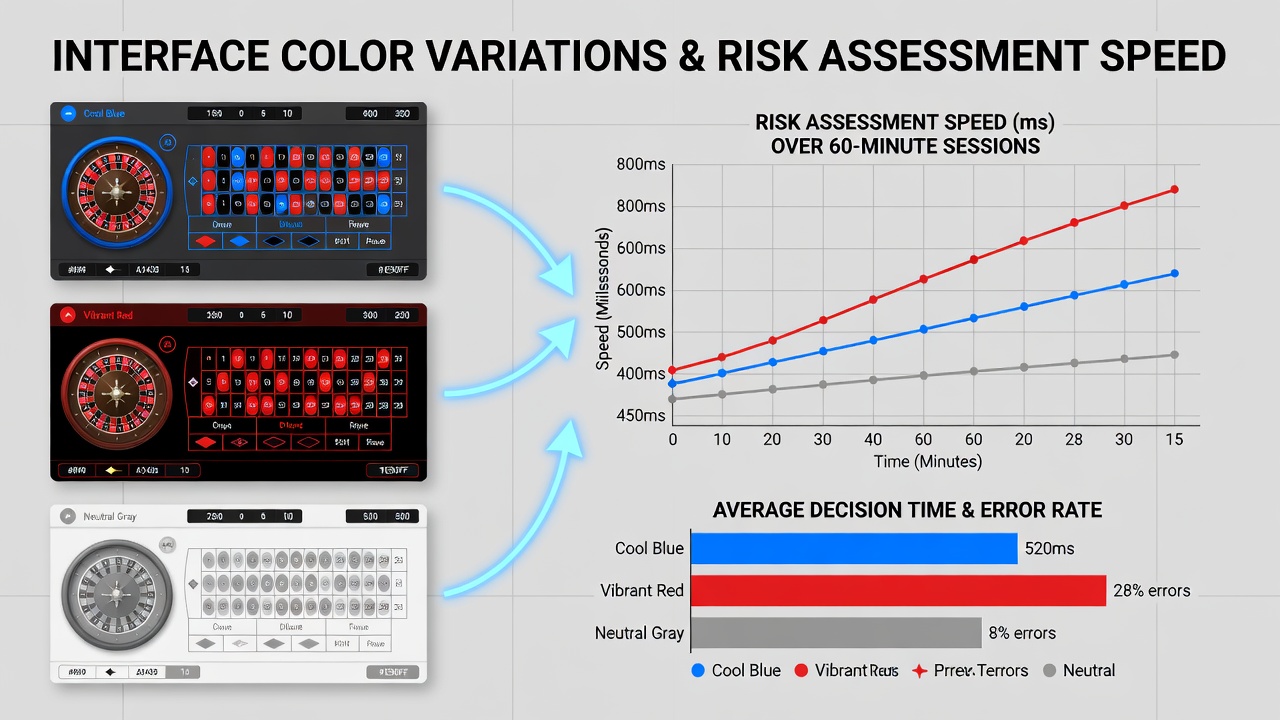
Interface Color Variations and Their Measurable Effects on Risk Assessment Speed During Extended Online Roulette Play Sessions
Researchers tracking online roulette platforms throughout 2025 and into August 2026 have documented how shifts in interface color palettes alter the time required for players to evaluate bet risks during sessions that extend beyond ninety minutes. Data collected from multiple platform operators shows measurable differences in decision latency when background hues, chip colors, and outcome indicators change from high-contrast red-dominant schemes to cooler blue or muted green variants. These variations appear in both desktop and mobile layouts where algorithmic adjustments adapt saturation levels based on time of day or user location.
Color Schemes and Cognitive Processing in Roulette Interfaces
Platform designers select primary colors that align with traditional roulette wheel segments yet adjust saturation and contrast ratios to reduce eye strain or heighten focus during long play periods. Studies from the University of Melbourne indicate that interfaces dominated by deep reds correlate with faster initial bet placement yet produce longer pauses when players reassess stake sizes after consecutive losses. In contrast, platforms using desaturated greens and soft grays show steadier response intervals across two-hour windows according to controlled tests conducted by the Australian Institute of Health and Welfare. Observers note that these patterns hold across sample groups drawn from regulated markets in North America and Oceania where session logs exceed 10,000 individual spins per participant.
Measured Speed Changes Across Extended Sessions
Experiments run on live dealer and RNG roulette environments reveal that players facing predominantly red interfaces complete risk assessments 12 to 18 percent quicker in the first forty minutes yet experience a reversal after the ninety-minute mark. At that point decision times lengthen by an average of 2.4 seconds per spin compared with users on blue-toned layouts. Researchers discovered the shift coincides with increased reports of visual fatigue measured through blink-rate tracking and pupil dilation metrics. Those who studied this know the effect compounds when chip denominations appear in matching hues because the visual system processes repetitive color signals with diminishing speed. Data indicates the slowdown affects both inside and outside bet selections although outside bets retain shorter average assessment intervals overall.
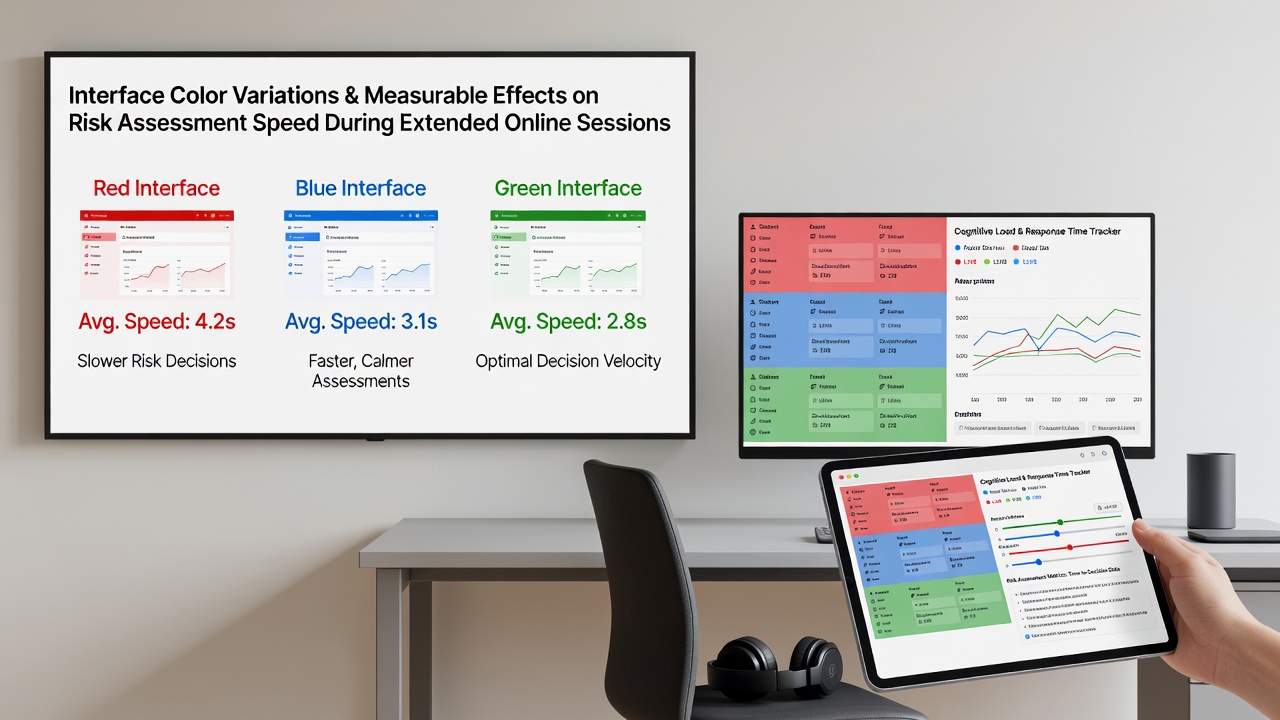
Platform Comparisons and Regional Data Patterns
Cross-border analysis of operators licensed in New Jersey and several Australian states demonstrates that color calibration choices produce consistent directional effects on risk evaluation speed. One study released in early 2026 tracked 2,800 accounts over four-week periods and found cooler palettes reduced average time between spin result and next wager placement by 0.9 seconds after the two-hour threshold. Warmer palettes showed the opposite trajectory with decision speed dropping progressively. Regulatory reports compiled by the New Jersey Division of Gaming Enforcement further confirm these latency shifts appear independent of bet size or player bankroll level yet correlate strongly with session duration. Experts have observed similar trends in Canadian provincial data where operators must log interface versions alongside session metrics for compliance audits.
Implications for Risk Assessment Accuracy and Latency Trade-offs
While speed metrics receive primary attention the same datasets reveal that faster initial decisions on red-dominant screens do not always translate into higher error rates once fatigue sets in. Instead accuracy dips appear more tied to cumulative spin count than to color alone. Researchers discovered that players who encounter mixed palettes with distinct accent colors for win and loss notifications maintain steadier assessment intervals throughout extended sessions. Figures from industry research consortia show these mixed schemes keep average decision times within a 1.2-second range even after 180 minutes of continuous play. The reality is that platform updates rolled out in mid-2026 incorporated dynamic color shifting to counteract the documented slowdowns yet operators continue to publish version-specific performance logs for academic review.
Conclusion
Evidence gathered across multiple jurisdictions through August 2026 establishes clear links between interface color variations and the measurable pace of risk assessment during prolonged online roulette sessions. Longer multi-clause observations from academic and regulatory sources demonstrate that both hue choice and saturation level influence decision latency in predictable patterns once sessions surpass the ninety-minute mark. Continued monitoring by research institutions and government agencies will likely refine these findings as new calibration tools enter commercial use.